Turkey in March: Weather and Where to Go
Plan a March trip to Turkey with realistic spring temperatures, rain and snow expectations, Cappadocia balloon advice, packing tips and the best places to visit.
Is March a good time to visit Turkey?
Yes, especially for travellers who want spring sightseeing, lighter crowds and cooler walking weather. March is a transition month. Istanbul begins to feel more springlike, Cappadocia remains cold at sunrise and can still see snow or frost, western Turkey becomes comfortable for archaeology, and Antalya is mild but not yet a dependable beach destination.
March is best for a culture-first trip rather than a swimming holiday. It suits Istanbul, Cappadocia, Ephesus, Pamukkale, Troy and Antalya particularly well because you can spend hours outside without midsummer heat. The trade-off is changeable weather: rain is possible in every main region, and central Turkey can still feel wintery early in the month.
What is the weather like in Turkey in March?
Turkey is too geographically varied for one national number. These official long-period averages are more useful for trip planning.
| Area | Average March high | Traveller reality |
|---|---|---|
| Istanbul | About 12.4°C | Cool spring weather with rain, wind and occasional colder spells. |
| Cappadocia / Nevsehir | About 10.9°C | Cold mornings and nights; frost and occasional late snow remain possible. |
| Izmir / Aegean | About 17°C | Comfortable sightseeing weather, with spring rain still part of the month. |
| Pamukkale / Denizli | About 16.5°C | Good temperatures for Hierapolis, but mornings and wet days can feel cool. |
| Antalya | About 18.4°C | Mild spring days; excellent for old towns and ruins, not guaranteed beach weather. |
These are climate averages, not forecasts. One March week can feel mild and sunny while another brings rain, wind or a brief cold snap. Check the forecast for each stop shortly before travel.
Early March vs late March in Turkey
The difference inside March can matter almost as much as the destination.
Early March still carries winter risk
During the first part of March, Istanbul can still feel cold beside the Bosphorus and Cappadocia mornings can be firmly below the comfort level of a light spring jacket. Central Anatolia may still have frost, ice or snow on higher ground. If you visit Cappadocia in early March, pack proper winter accessories for sunrise even if the afternoon forecast looks mild.
For Ephesus and Pamukkale, early March is excellent when the weather is dry because the sites are quiet and walking temperatures are comfortable. The main risk is not heat but rain and slippery stone.
Late March feels more clearly like spring
By the second half of March, longer daylight and gradually rising temperatures make city walks and archaeology easier. Western and southern Turkey often show more spring greenery, while cafes and waterfront areas feel more active. Cappadocia can still be cold at dawn, but afternoons are generally easier for valley walks than in January or February.
Late March is a strong choice if you want a bridge between low-season prices and April-style spring travel. It is not summer, and no exact week is guaranteed, but the seasonal direction is clearly warmer.
Best places to visit in Turkey in March
March rewards destinations where culture, archaeology and scenery still work when the weather changes.
What is Istanbul like in March?
March is one of Istanbul's transition months: still cool, but noticeably closer to spring.
Official long-period climate data gives Istanbul an average March high of about 12.4°C. That number can feel very different depending on wind and sunshine. A calm afternoon in Sultanahmet may feel pleasant, while a Bosphorus ferry deck can feel several degrees colder.
March is excellent for a first-time sightseeing route because long outdoor days are easier than in midsummer. Group Hagia Sophia, the Blue Mosque, Basilica Cistern and Topkapi Palace together, then use another day for Karakoy, Galata, Besiktas or Kadikoy. Keep a museum, hammam, market or long lunch as a weather backup.

Do not pack for a guaranteed spring postcard. Rain remains normal, and a colder period can arrive. Use layers: a light base, jumper or fleece, waterproof outer layer and closed walking shoes. For a practical city plan, use our 3 day Istanbul itinerary and keep the order flexible around the forecast.
March can feel like two seasons in one day.
Nevsehir's average March high is about 10.9°C, but that does not describe a pre-sunrise balloon pickup. Nights and early mornings are much colder, and frost remains realistic. A sunny afternoon can be comfortable for walking while the same day begins with gloves and a warm hat.
Snow is still possible, especially earlier in the month, but it is not something to promise for specific dates. March can also bring thawing ground and muddy valley trails. Shoes with grip matter more than fashion trainers if you plan Red Valley, Rose Valley or other unpaved walks.

Hot-air balloons can fly in March when conditions are safe, but monthly climate averages cannot tell you whether a flight will operate on your morning. Wind, visibility and other aviation conditions decide the actual result. If a balloon flight is important, stay long enough to keep a second or third morning available.
For the rest of the day, combine Goreme Open Air Museum, an underground city and valley viewpoints so you have both indoor and outdoor options. See our best time to visit Turkey and Cappadocia guide if your main decision is whether March, April, May or autumn suits you better.
Ephesus and Pamukkale in March
For travellers who dislike heat, March can be one of the easiest times to walk the big archaeological sites.
Ephesus: comfortable walking, weather-dependent surfaces
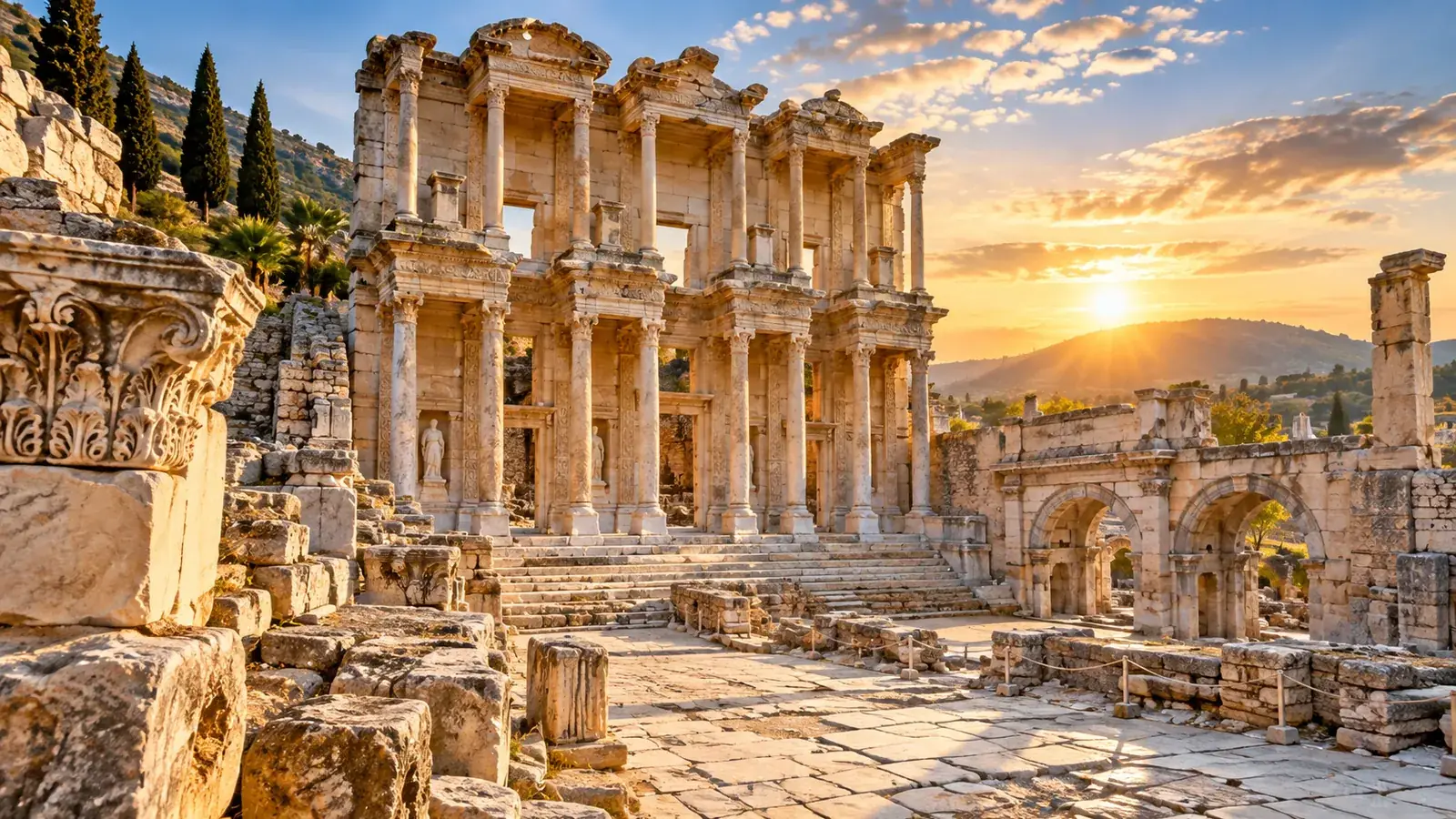
The Izmir region's March average high is around the mid to upper teens. That is very comfortable for the exposed streets of Ephesus. You can spend several hours around the Library of Celsus, Terrace Houses, theatre and Marble Street without the intense heat that defines July and August.
The trade-off is rain. Polished stone can become slippery, so closed shoes with grip are useful. Carry a compact rain shell and keep some flexibility in the day if a heavy shower is forecast.
Pamukkale: good for Hierapolis, cooler on the travertines
Denizli's average March high is about 16.5°C. That is comfortable for Hierapolis, but the exposed travertines can feel cooler in wind or cloud, especially because sections are walked barefoot. Bring easy-to-remove shoes and dry socks for afterwards.
If you are connecting the sites in one route, see how to get from Ephesus to Pamukkale for the practical transport choices.
Is Antalya warm enough in March?
March is mild on the Mediterranean, but it should still be planned as spring sightseeing rather than summer beach season.
Antalya's long-term average March high is about 18.4°C. Sunny afternoons can feel pleasantly warm, particularly in sheltered parts of Kaleici, but rain and cooler days remain possible. The sea is still cool for most visitors, and resort services can be quieter than in late spring and summer.
March is strong for Perge, Aspendos, Termessos, waterfalls and Antalya Old Town because you can explore outdoors without extreme heat. This makes Antalya a useful final stop after Istanbul, Cappadocia, Ephesus or Pamukkale even if you never go swimming.

Fethiye, Marmaris and Bodrum follow the same general idea: spring can be attractive for waterfront walks, ruins and road trips, but the full summer beach atmosphere arrives later.
Good Turkey itineraries for March
March works best when the route is built around culture first and weather flexibility second.
What should you wear in Turkey in March?
Pack for cold sunrise conditions and mild afternoons rather than choosing one season.
- Waterproof outer layer: useful in Istanbul, western Turkey and the Mediterranean during spring showers.
- Warm mid-layer: a fleece, jumper or light puffer is useful for Cappadocia and cool evenings.
- Closed walking shoes with grip: important for wet city streets, polished ruins and muddy valley paths.
- Long trousers: practical across cities, archaeology and cold mornings.
- Hat and gloves for Cappadocia: still useful for pre-sunrise pickups, especially early in March.
- Sunglasses and sunscreen: March sun can be strong even when the air feels cool.
- Small day bag: carry layers as temperatures change between morning and afternoon.
Do not pack only for Antalya if your route includes Cappadocia. You can move from an 18°C coastal afternoon to near-freezing early-morning conditions in central Turkey within the same trip.
Is March busy or expensive in Turkey?
March is generally shoulder season, which is part of its appeal.
Most major cultural destinations are quieter than April, May, September and the peak summer months. That can mean easier museum visits, more comfortable archaeological sites and a better choice of accommodation at lower-season rates. Exact prices still depend on weekends, events and how close you book.
Cappadocia can remain popular year-round, especially on good-weather weekends, and balloon prices do not follow a simple low-season rule because capacity and weather affect availability. Book the experiences that matter most, but you usually do not need the same minute-by-minute crowd strategy that summer requires.
If low prices are your main goal, compare March with our cheapest month to visit Turkey guide. March often offers a useful compromise: better weather than deep winter while still avoiding peak-season pressure.
March planning mistakes to avoid
The biggest mistake is treating March as either full winter or full spring.
- Packing only light spring clothes. Cappadocia sunrise and cold spells can still require winter layers.
- Expecting snow on exact Cappadocia dates. Snow is possible, not guaranteed.
- Planning a beach holiday around Antalya. March is mild, but swimming and full resort activity are not dependable.
- Ignoring rain. A light waterproof layer is useful across most of the route.
- Wearing smooth shoes at archaeological sites. Wet marble and stone can be slippery.
- Booking only one Cappadocia morning for balloons. Weather cancellations can happen in every season.
- Assuming early and late March feel the same. Late March generally moves more clearly toward spring.
Turkey in March: common questions
Short answers for planning a spring-transition trip.
Is March a good month to visit Turkey?
Yes. March is good for cities, archaeology and Cappadocia if you are comfortable with changeable weather. Crowds are usually lighter than in peak spring and summer.
Is Turkey warm in March?
It depends on the region. Istanbul averages about 12.4°C for daytime highs, Cappadocia about 10.9°C, Izmir around 17°C and Antalya about 18.4°C.
Does it snow in Cappadocia in March?
It can, especially earlier in the month, but snow is not guaranteed. Frost, cold sunrise temperatures and occasional wintry conditions remain realistic.
Do hot-air balloons fly in Cappadocia in March?
They can fly when conditions are safe. Wind and other aviation conditions can cancel a morning, so keep more than one morning available if the flight matters to you.
Is Istanbul rainy in March?
Rain is normal in March, but it does not usually mean constant rain all day. Pack a waterproof layer and keep indoor options ready.
Can you swim in Antalya in March?
Some cold-water swimmers may, but March is not dependable beach season. Plan Antalya for sightseeing, archaeology and mild coastal weather rather than guaranteed swimming.
What should I pack for Turkey in March?
Pack layers, a waterproof jacket, closed walking shoes, long trousers and a warmer layer for Cappadocia. Add gloves and a hat if you have sunrise plans.
Is March or April better for Turkey?
Choose March for lower crowds, lower-season value and cooler sightseeing. Choose April for warmer weather, more reliable spring conditions and easier outdoor days.
Compare March with February and April.
The neighbouring months make the weather trade-off clear.
Climate references: Turkish State Meteorological Service official long-period climate statistics for Istanbul, Nevsehir, Izmir, Denizli and Antalya, reviewed 30 September 2026. Historic averages are planning guides, not forecasts. Cappadocia balloon operations depend on current conditions and aviation safety decisions.