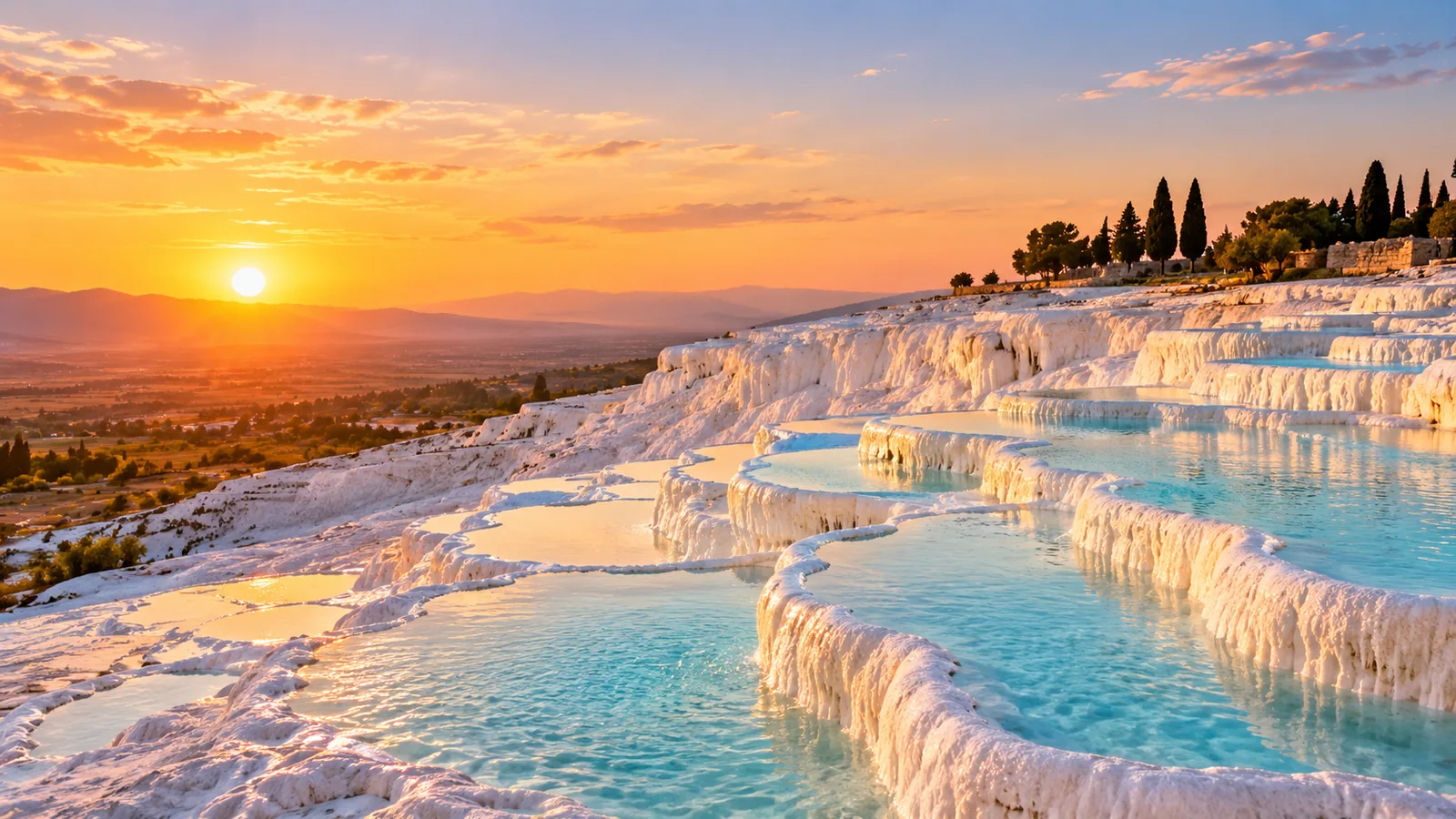
Pamukkale & Hierapolis Travel Guide
White travertine terraces, the ancient spa city of Hierapolis, a huge Roman theatre and one of Turkey’s most unusual natural-and-archaeological combinations—planned as one connected visit.
Pamukkale is not only the white terraces. Hierapolis is half of the experience.
The travertines are the visual reason most people come, but the ancient city above them is large, historically important and easy to underestimate. Plan the day as one combined natural-and-archaeological visit rather than taking a few photos at the terraces and leaving.
UNESCO lists Hierapolis-Pamukkale as one World Heritage property because the calcite terraces and the ancient thermal spa city developed together around the same hot springs. Hierapolis grew into an important Greco-Roman centre with baths, temples, a theatre and a vast necropolis.
Access to the white formations is managed to protect the site, so follow the marked visitor routes and current local instructions. The best experience is to slow down, enjoy the terraces from different angles, then give Hierapolis enough time for the theatre and main archaeological areas.
Two places that make one connected destination
The travertines and Hierapolis should be planned together. One explains the natural hot-spring landscape; the other shows how people used those waters for centuries.
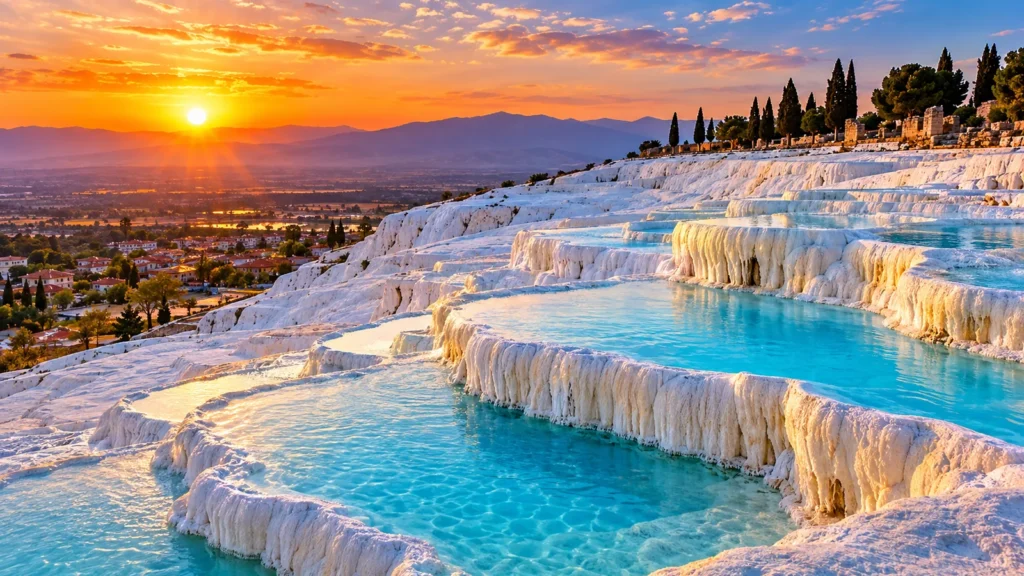
Pamukkale Travertines
White mineral terraces formed by thermal waters and one of Turkey’s most photographed natural sights.
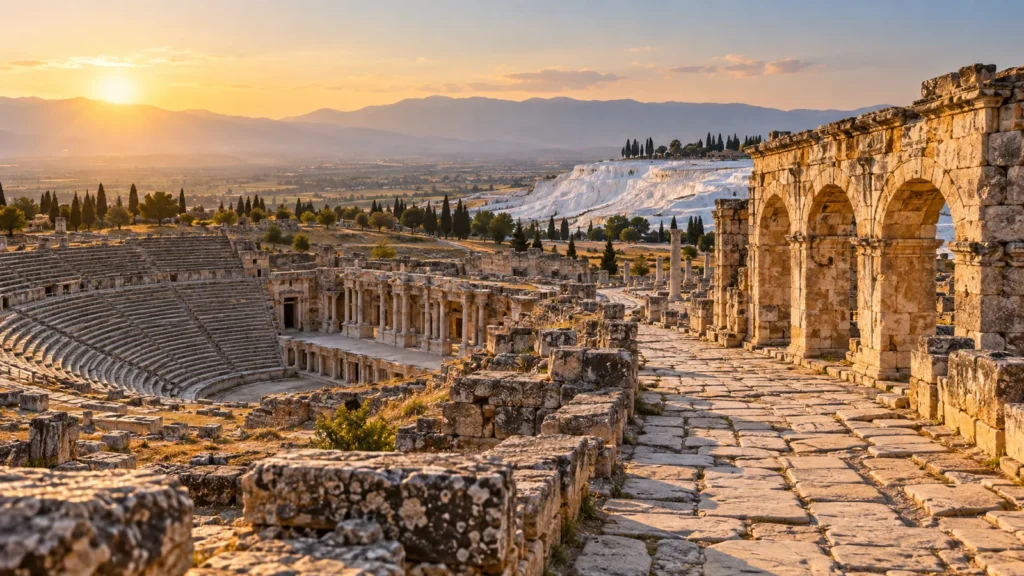
Hierapolis
Ancient city above the Pamukkale terraces with a theatre, necropolis and extensive ruins.

Pamukkale Antique Pool
Practical Pamukkale Antique Pool guide: current 2026 reopening status, seasonal hours, separate pool fees, Cleopatra legend, thermal-water experience and how to combine it with Hierapolis and the…
Ancient Theatre
One of the strongest monuments at the site. The restored seating and stage area show how important Hierapolis became during the Roman period.
Necropolis
A vast burial landscape that stretches beyond the central ruins and helps show the scale and long history of the ancient city.
Baths and hot springs
Hierapolis developed around thermal water. The baths and water systems are essential to understanding why the city grew here.
Travertine viewpoints
Take time to see the terraces from more than one angle instead of treating them as a single photo stop.
A practical way to organise Pamukkale & Hierapolis
Keep the terraces and ruins in one continuous visit, then adjust the pace depending on whether nature, archaeology or thermal history matters most to you.
Pamukkale Travertines
Start with the white calcite terraces and the views over the Denizli plain. Follow current visitor routes carefully because access is managed to protect the formations.
See the travertines guide →Hierapolis Ancient City
Continue into the archaeological zone for the theatre, monumental streets, bath remains and other Greco-Roman and Byzantine structures. Allow more time than you think.
See the Hierapolis guide →Pamukkale Antique Pool
If a thermal swim matters to you, add the reopened Antique Pool inside Hierapolis. It has a separate fee and current seasonal hours, so check before travel.
See the Antique Pool guide →Theatre + necropolis
Use your remaining time for the ancient theatre and the necropolis rather than trying to tick off every ruin.
See planning tips →Pamukkale is easy to visit independently, but a guided day can simplify transport and explain why the natural site and ancient city belong together.
If you are already staying nearby, independent exploration gives you the most freedom. If you are coming from Antalya, Kusadasi, Izmir or another city, a day tour can make the long transport easier and add historical context at Hierapolis.
Choose the Pamukkale experience that fits your trip
Compare the classic guided UNESCO visit with sunrise ballooning, tandem paragliding, Karahayit thermal-spa time and a second-day regional route to Laodicea, Kaklik Cave and Salda Lake.
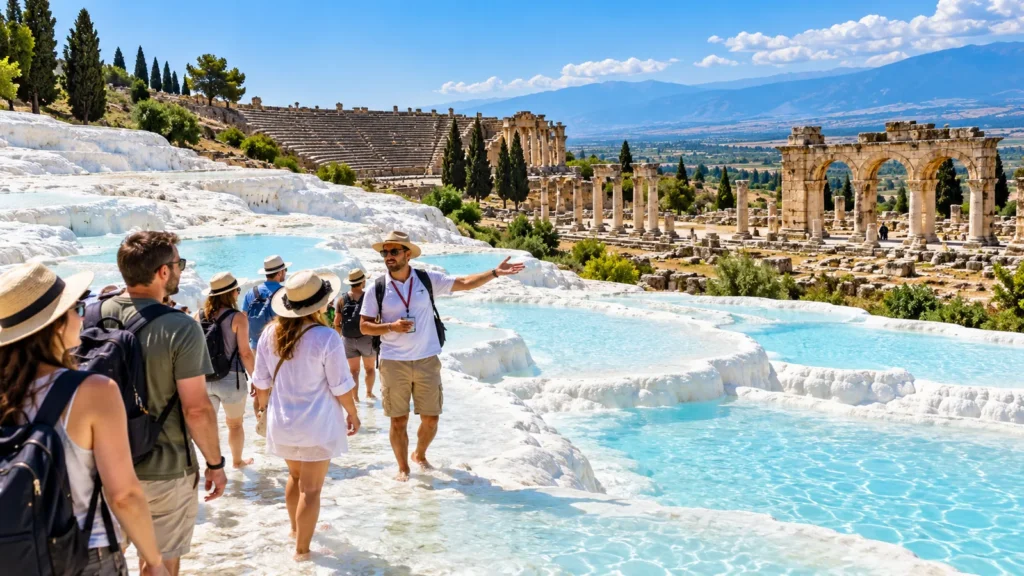
Pamukkale & Hierapolis Day Tour
Explore Pamukkale’s white travertines and the ancient city of Hierapolis with a guide, with local pickup and optional thermal-pool choices depending on the itinerary.
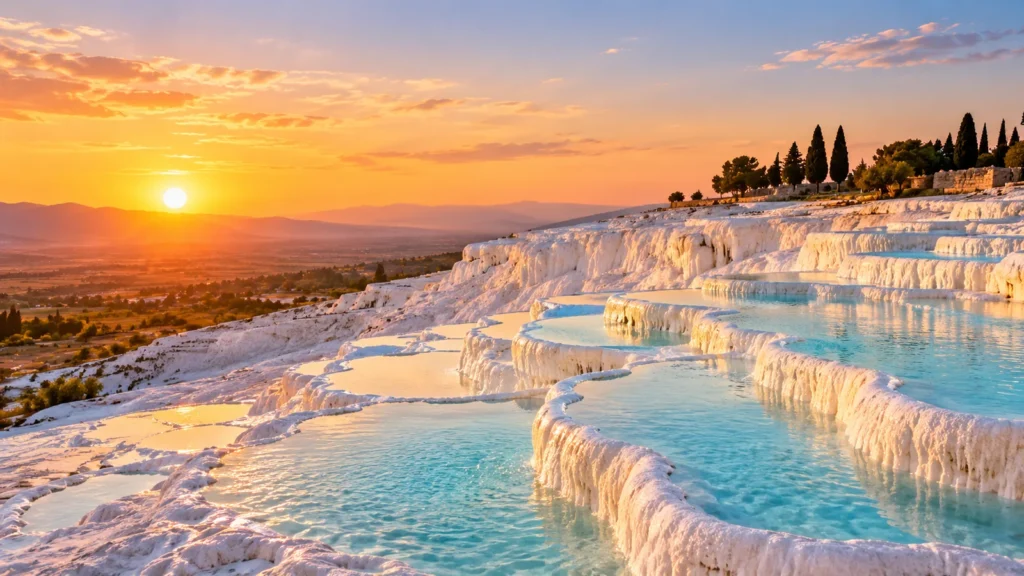
Pamukkale Hot Air Balloon Tour
Pamukkale balloon-flight guide: sunrise pickup, typical flight time, travertine and Hierapolis views, weather cancellations and booking checks.
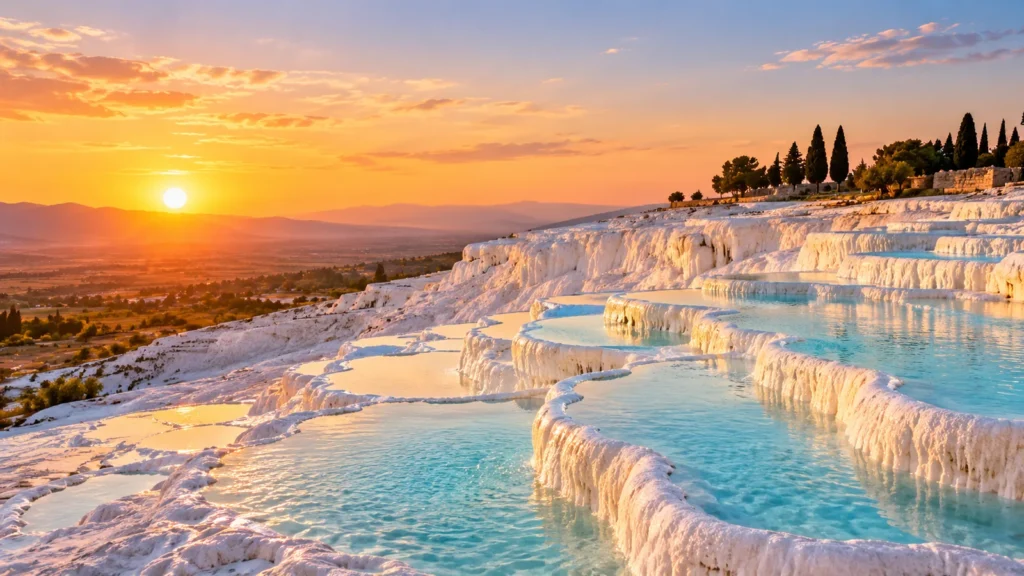
Pamukkale Paragliding
Pamukkale tandem-paragliding guide: 15–30 minute flight-time range, hotel transfers, weather, takeoff, landing, photos and safety checks.
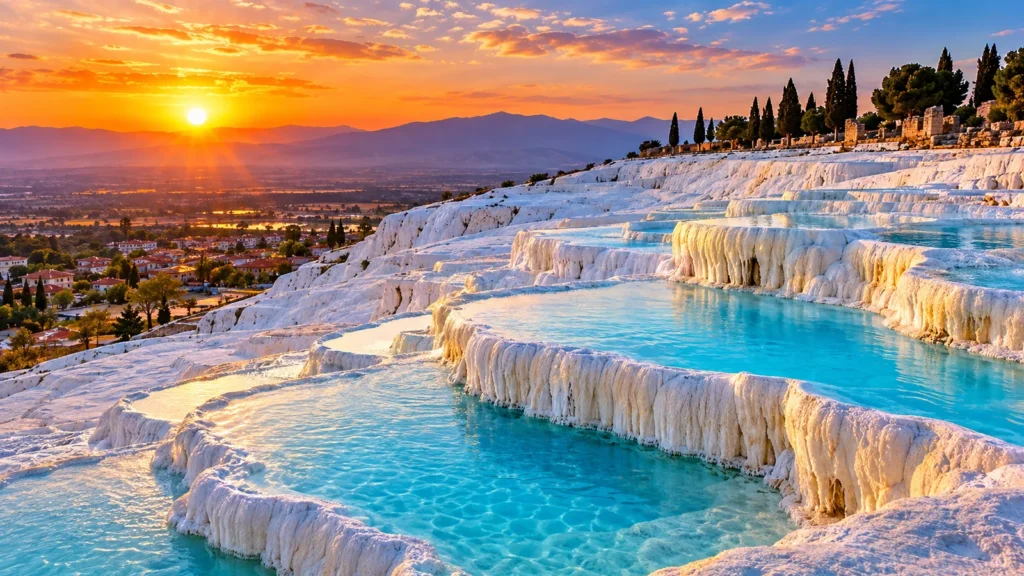
Pamukkale Thermal Spa & Karahayit Red Springs
Pamukkale thermal-spa guide: Karahayit red mineral springs, thermal pools, mud-bath options, hotel-spa access and how this differs from the Antique Pool.
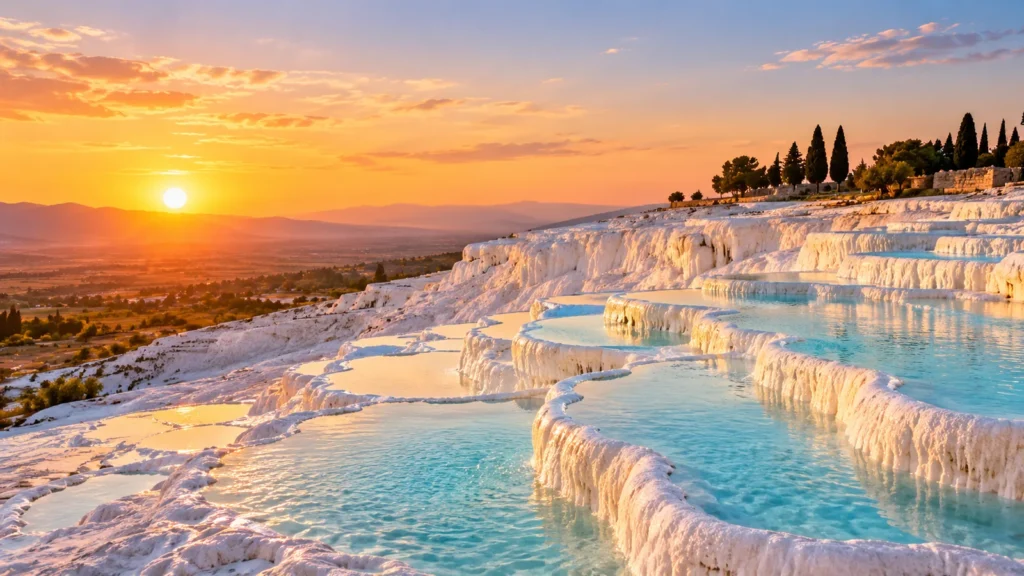
Laodicea, Kaklik Cave & Salda Lake Day Tour from Pamukkale
Pamukkale regional day-tour guide combining Laodicea, Kaklik Cave and Salda Lake with private transport, longer driving time and a full-day itinerary.
What should you prioritise at Pamukkale?
Travertines + Hierapolis
Make the UNESCO site your priority. A guided tour is useful if you want the archaeology explained clearly.
Hot air balloon
Choose ballooning for a slower aerial experience over the white terraces and Hierapolis at sunrise.
Paragliding
Choose tandem paragliding for a shorter, more active aerial view when weather conditions allow.
Thermal spa or regional tour
Use Karahayit for relaxation, or travel to Laodicea, Kaklik Cave and Salda Lake if you want a full second sightseeing day.
Planning Pamukkale & Hierapolis
Short answers for first-time visitors deciding how much time and structure they need.
How much time do I need?
Allow at least half a day for both the travertines and the main Hierapolis ruins. A full day is better if you want the theatre, necropolis and a slower pace.
Are Pamukkale and Hierapolis in the same place?
Yes. They form one connected UNESCO World Heritage property and are normally visited together.
Can I walk everywhere on the white terraces?
No. Visitor access is controlled to protect the formations. Follow the marked routes and current on-site instructions.
What should I see in Hierapolis?
The ancient theatre, necropolis, baths and main monumental areas are among the strongest parts of the site.
Is Pamukkale UNESCO listed?
Yes. Hierapolis-Pamukkale has been on the UNESCO World Heritage List since 1988.
Where to go after Pamukkale
Choose the next destination that fits naturally into your route.
Ephesus & Selcuk
Roman streets, the Library of Celsus and one of Turkey’s strongest archaeological experiences.
Izmir
Waterfront city life and a useful base for exploring the wider Aegean.
Antalya
Old town, waterfalls, Mediterranean boat trips and major ancient sites.
Cappadocia
Valleys, underground cities, rock-cut churches and balloon experiences.