Grand Bazaar Istanbul Guide
Explore Istanbul's historic covered market with a plan: where to start, what to buy, how bargaining works, how long to allow, what to avoid and which old-city sights fit naturally around it.
Do not treat the Grand Bazaar as one giant souvenir shop.
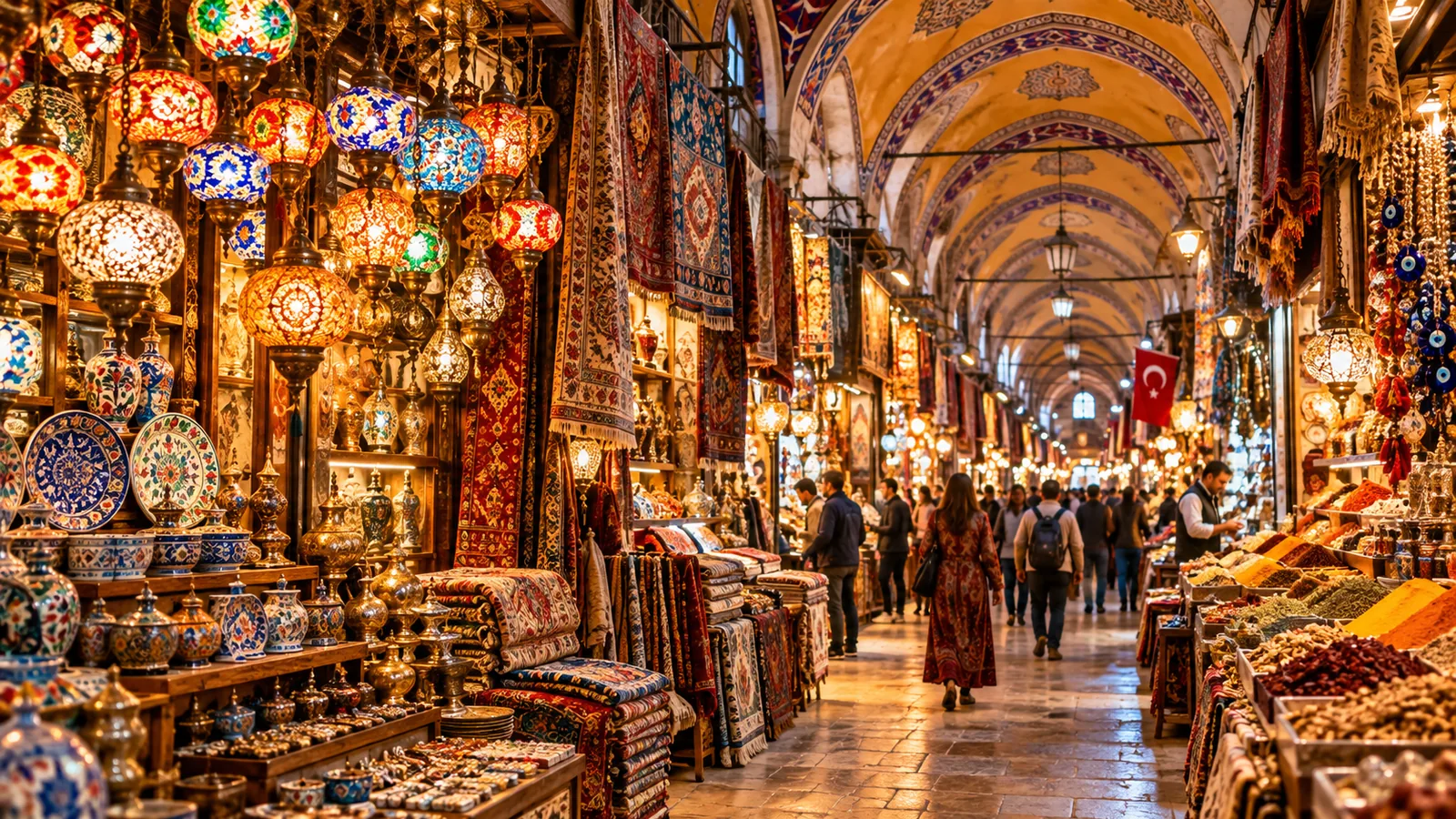
The Grand Bazaar is a network of covered streets, historic bedestens, workshops and shops between Beyazit and Nuruosmaniye. GoTürkiye describes 61 covered streets and thousands of shops, so the useful goal is not to see every lane. Pick a few product categories, wander slowly and leave room for the streets and hans around the covered core.
The market grew from a fifteenth-century Ottoman commercial centre after the conquest of Constantinople. Its oldest bedestens became anchors for a much larger trading district that developed around jewellery, textiles, carpets, leather, metalwork and other specialist trades.
For a first visit, allow about 90 minutes to two hours. If you are seriously comparing carpets, jewellery or leather, the visit can easily take half a day.
More than five centuries of trade in Istanbul's old city
The bazaar is still a working commercial district, but its bedestens, gates, covered lanes and specialist trades also preserve an important layer of Ottoman urban history.
The commercial core begins
The bazaar's early bedestens developed under Mehmed II as part of the post-conquest commercial centre of Istanbul.
Iç Bedesten + Sandal Bedesten
The two early covered-market structures form the historic core around which later streets, shops and hans expanded.
A market that feels like a neighbourhood
GoTürkiye describes a maze of dozens of covered streets with different product areas rather than one single shopping hall.
Not a museum set
Jewellers, textile sellers, leather shops, carpet dealers, cafés and workshops continue to operate throughout the bazaar.
Start with categories, then compare several shops
The Grand Bazaar merchants' association lists jewellery, textiles, gifts and ceramics, bags, silver and natural stones, carpets, leather, spices and copperware among the major trades operating inside the market.
Jewellery & precious metals
The bazaar has a deep jewellery tradition. For expensive purchases, compare workmanship, weight, stone details and final price, and ask for a proper written receipt or invoice.
Carpets, kilims & textiles
Take your time. Ask what material, origin, age and production method the seller is describing, then compare similar pieces before making a large purchase.
Ceramics, lamps & copperware
These are colourful, easy-to-browse categories, but quality and handmade claims vary. Look closely at finishing and ask how fragile items will be packed for travel.
Leather, bags & accessories
Compare stitching, lining, hardware and material rather than buying only by appearance. Prices can vary significantly between shops.
Free to enter, but check current public opening times before you go.
The Grand Bazaar does not require a general sightseeing ticket. The bazaar's own management plan says the complex is intended to remain active throughout the year, while daily public opening and closing times are set by management and holiday arrangements can vary.
Because shop hours and special closures can change, Going2Turkey does not hard-code a daily opening time here. Check the bazaar association's current notices close to your visit—especially around public or religious holidays.
Check official Grand Bazaar information →Friendly negotiation is normal. Pressure is optional.
GoTürkiye describes haggling as part of the market experience. The useful rule is simple: negotiate only when you are genuinely interested, keep the tone friendly and be comfortable walking away.
Do not start with the first shop
Look at similar quality in several places. You need a reference point before you can judge whether a price is reasonable.
Understand exactly what is being sold
For carpets, jewellery, leather or antiques, ask about material, origin, age, weight, repairs, certificates and return or shipping arrangements where relevant.
Confirm currency and payment
Before paying, make sure both sides agree on the final amount, currency and what is included. For expensive goods, keep written documentation.
Independent is best for casual browsing. A local guide can help with serious shopping.
You do not need a tour just to see the Grand Bazaar. A guide becomes more useful when you are looking for specific crafts, want help navigating specialist areas, or would value a local person who can explain bargaining customs and compare shops with you.
Choose shopping help or a wider Istanbul old-city route
These are optional services—the Grand Bazaar itself does not require a tour. Check the live listing for current duration, language, pickup, inclusions and cancellation terms.
Grand Bazaar shopping experience with a local
Useful if you have specific products in mind, want help comparing shops or prefer local assistance with bargaining and navigation.
Check current availabilityHagia Sophia + Blue Mosque + Grand Bazaar tour
Better when you want the bazaar as one part of a guided Sultanahmet route instead of spending several hours shopping.
Compare old-city tourTurn the bazaar into a walking route, not an isolated stop
The covered market sits between several historic districts, so it works well as the middle of an old-city day rather than the only destination.
Suleymaniye Mosque
One of Istanbul's great imperial mosques, with a calmer atmosphere and excellent views toward the Golden Horn.
Spice Bazaar
A smaller, food-focused historic market that pairs naturally with the Grand Bazaar if you enjoy market streets and local flavours.
Beyazit Square
Use the Beyazit side as a natural entry or exit point and continue toward Istanbul University and the old-city streets.
Hagia Sophia + Blue Mosque
Walk or take the tram toward Sultanahmet when you want monumental history after the market.
Grand Bazaar planning questions
Trading hours and holiday arrangements can change, so check current bazaar notices close to your travel date.
How long should I allow for the Grand Bazaar?
About 90 minutes to two hours is a useful first-visit range if you want to browse several lanes without rushing. Serious shopping can take much longer.
Is there an entrance fee?
No general entrance ticket is required to walk through the Grand Bazaar. You pay only for purchases or an optional guide or shopping tour.
Can I bargain?
Yes. Bargaining is common for many goods. Keep it friendly, compare quality and prices first, and walk away if the deal does not feel right for you.
What should I buy?
Popular categories include jewellery, carpets and kilims, textiles, leather, ceramics, lamps, copperware and souvenirs. Quality varies, so compare before buying expensive items.
What are the opening hours?
Daily public opening and closing times are set by bazaar management and holiday arrangements can vary. Check the current Grand Bazaar association information close to your visit rather than relying on an old timetable.
What should I combine with the Grand Bazaar?
Suleymaniye Mosque, the Spice Bazaar, Beyazit Square and the Sultanahmet sights all fit naturally into the same old-city day.
Next attraction guides
Hagia Sophia
Visitor route, mosaics and current cultural-entry planning.
Blue Mosque
Free sightseeing entry, prayer-time planning and architecture.
Topkapi Palace
Courtyards, Harem, collections and practical ticket planning.
Basilica Cistern
Columns, Medusa heads, current sessions and a focused 45-to-60-minute visit.