Blue Mosque Visitor Guide
How to visit Istanbul’s Sultan Ahmed Mosque: when tourists can enter, what to wear, what to notice inside, how long to allow and which Sultanahmet sights fit naturally into the same day.
The Blue Mosque is easy to add to a Sultanahmet day — if you plan around prayer.
Sultan Ahmed Mosque is an active place of worship, not a ticketed museum. General sightseeing entry is free, but visitor access pauses around daily prayers and religious events.
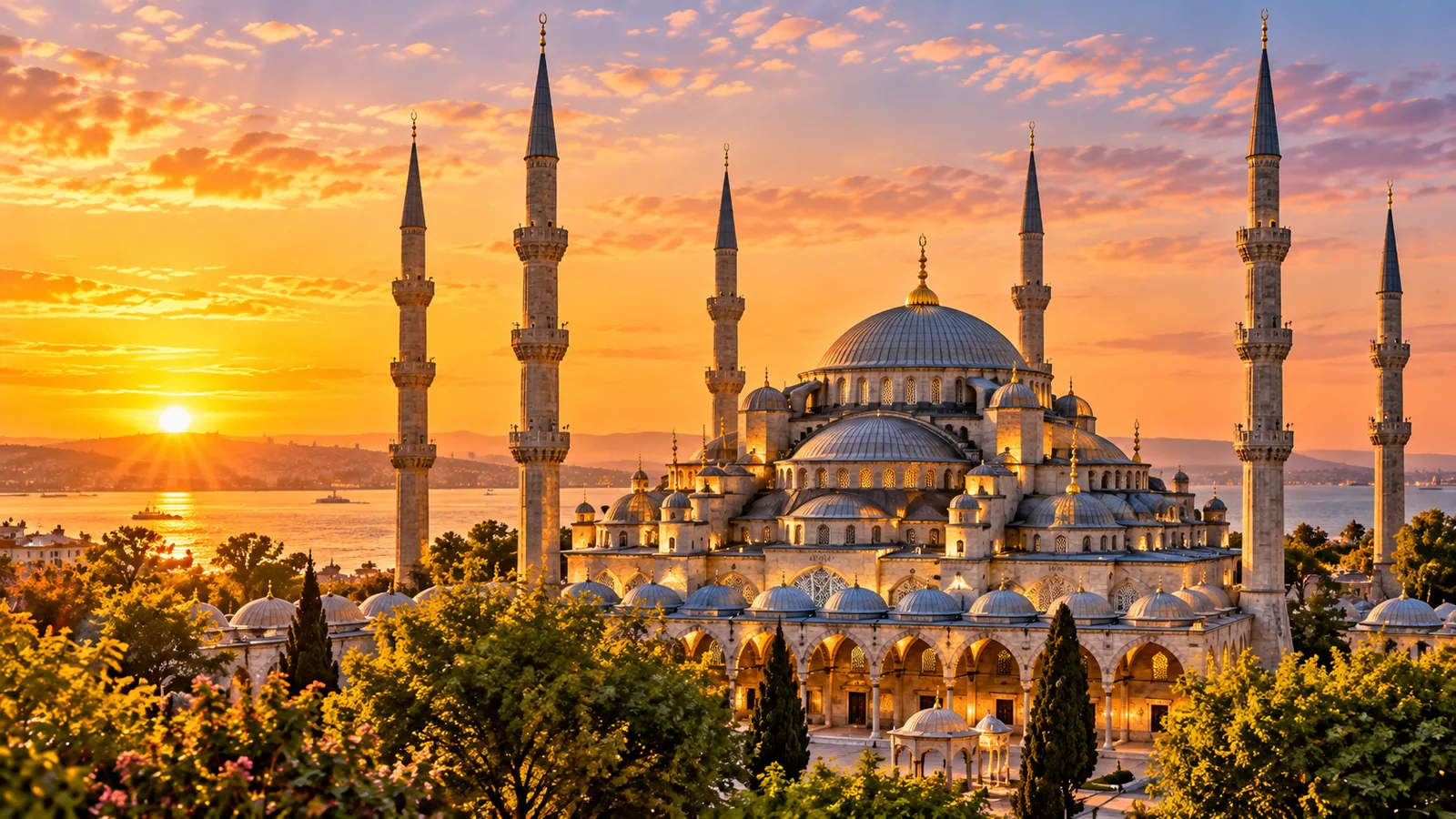
The mosque was built for Sultan Ahmed I between 1609 and 1616 and was designed by Sedefkâr Mehmed Ağa. Its six minarets, cascading domes and extensive İznik tile decoration made it one of Istanbul’s defining Ottoman monuments.
Most first-time visitors pair it with Hagia Sophia because the two monuments face the same historic square and show very different chapters of Istanbul’s architecture.
A seventeenth-century Ottoman landmark built to command Istanbul’s imperial skyline
The Blue Mosque was created as a major imperial mosque complex and remains one of the clearest visual symbols of Sultanahmet today.
Construction begins
Sultan Ahmed I commissioned a new imperial mosque opposite Hagia Sophia in the historic centre of the city.
The mosque is completed
Sedefkâr Mehmed Ağa’s design combines a large central dome, semi-domes and six slender minarets.
Thousands of decorative tiles
Blue-toned İznik tiles with floral patterns became the source of the English nickname “Blue Mosque”.
Still an active mosque
The building remains a functioning place of worship while also welcoming large numbers of cultural visitors.
Four details that make the visit more meaningful
The mosque is more impressive when you know what you are looking at before you step inside.
Six minarets
The six-minaret silhouette is one of the mosque’s most recognisable features and is best appreciated from the Hippodrome or Sultanahmet park.
İznik tiles
Look for floral tile patterns in blue, green and white tones across the interior, especially in the upper wall surfaces.
Central dome & semi-domes
The layered dome system creates the cascading exterior shape and opens the prayer hall into one large, unified interior volume.
Prayer hall
Remember that the building’s primary role is religious. Visitor behaviour should remain quiet and respectful even outside formal prayer periods.
Visit between prayers and treat worship access as the priority.
General sightseeing entry is free. The mosque remains open as a place of worship, so tourist access pauses around the five daily prayers and can be more restricted around Friday congregational prayer or special religious occasions.
Prayer times move through the year, so avoid relying on a fixed timetable copied months in advance. Check the current daily prayer schedule shortly before visiting.
Read the GoTürkiye Blue Mosque overview →A practical Sultanahmet half-day
The Blue Mosque sits inside Istanbul’s strongest walkable cluster of major sights.
Blue Mosque
Visit between prayers and take time in the courtyard before entering the prayer hall.
Hagia Sophia
Walk across Sultanahmet Square for a completely different architectural and historical layer.
Basilica Cistern or Hippodrome
Choose the cistern for an underground ticketed attraction, or the Hippodrome for an easy open-air history stop.
You do not need a tour just to enter the Blue Mosque.
The mosque is straightforward to visit independently. A guide is useful when you want Ottoman architecture, tile symbolism, the Hippodrome and Hagia Sophia explained as one connected historic district.
Book a guide for context, not because the mosque needs a ticket
Tour products change. Read the live itinerary and inclusions before booking, especially where Hagia Sophia or the Basilica Cistern are included.
Blue Mosque & Sultanahmet walking tour
Useful for first-time visitors who want the mosque, surrounding square and nearby old-city history explained in one route.
Check current tour optionsHagia Sophia + Blue Mosque guided tour
A stronger option when you want Byzantine and Ottoman history compared side by side, with some products also offering a Basilica Cistern add-on.
Compare guided optionsWhat to see next without wasting travel time
The Blue Mosque is surrounded by major first-time Istanbul sights, so there is little reason to leave Sultanahmet between stops.
Hagia Sophia
The essential companion sight for comparing Byzantine and Ottoman monumental architecture.
Basilica Cistern
An atmospheric underground contrast to the bright open spaces of Sultanahmet.
Hippodrome
Walk the former Byzantine ceremonial arena and see the surviving monuments between mosque visits.
Topkapi Palace
Add it when you have several more hours and want a deeper Ottoman history day.
Blue Mosque planning questions
Visitor arrangements can change around prayer and religious events, so keep your schedule flexible.
Is the Blue Mosque free to visit?
Yes. General sightseeing entry is free. A paid guided tour is optional and is for historical context rather than admission.
When should tourists visit?
Visit between the five daily prayers. Earlier in the day is often easier for sightseeing, while Friday midday is normally the most important congregational prayer period.
What should I wear?
Dress modestly. Shoulders and knees should be covered, women should cover their hair, and shoes are removed before entering the carpeted prayer area.
How long should I allow?
About 30–45 minutes is usually enough for the mosque itself, but leave extra time in case visitor access pauses for prayer.
Why is it called the Blue Mosque?
The English nickname comes from the extensive blue-toned İznik tile decoration inside. The Turkish name is Sultanahmet Camii, or Sultan Ahmed Mosque.
What should I combine with the Blue Mosque?
Hagia Sophia, the Hippodrome and Basilica Cistern are the easiest immediate additions. Add Topkapi Palace if you have several more hours.
Next attraction guides
Hagia Sophia
Visitor route, history, mosaics and practical planning.
Basilica Cistern
Columns, reflections, Medusa heads and entry planning.
Topkapi Palace
Courtyards, collections, Harem planning and time needed.
Grand Bazaar
How to explore the market without treating it as one quick shopping stop.