Perge Ancient City Guide
Walk through one of Antalya's strongest ancient-city experiences: monumental gates, Roman baths, a long colonnaded street, agora, stadium and water architecture.
Perge is one of the best places near Antalya to understand a full Roman city layout.
Perge Ancient City sits in Aksu, east of central Antalya. The site is large enough to feel like a real city rather than a single monument, with streets, gates, baths, public spaces and a stadium spread across the archaeological area.
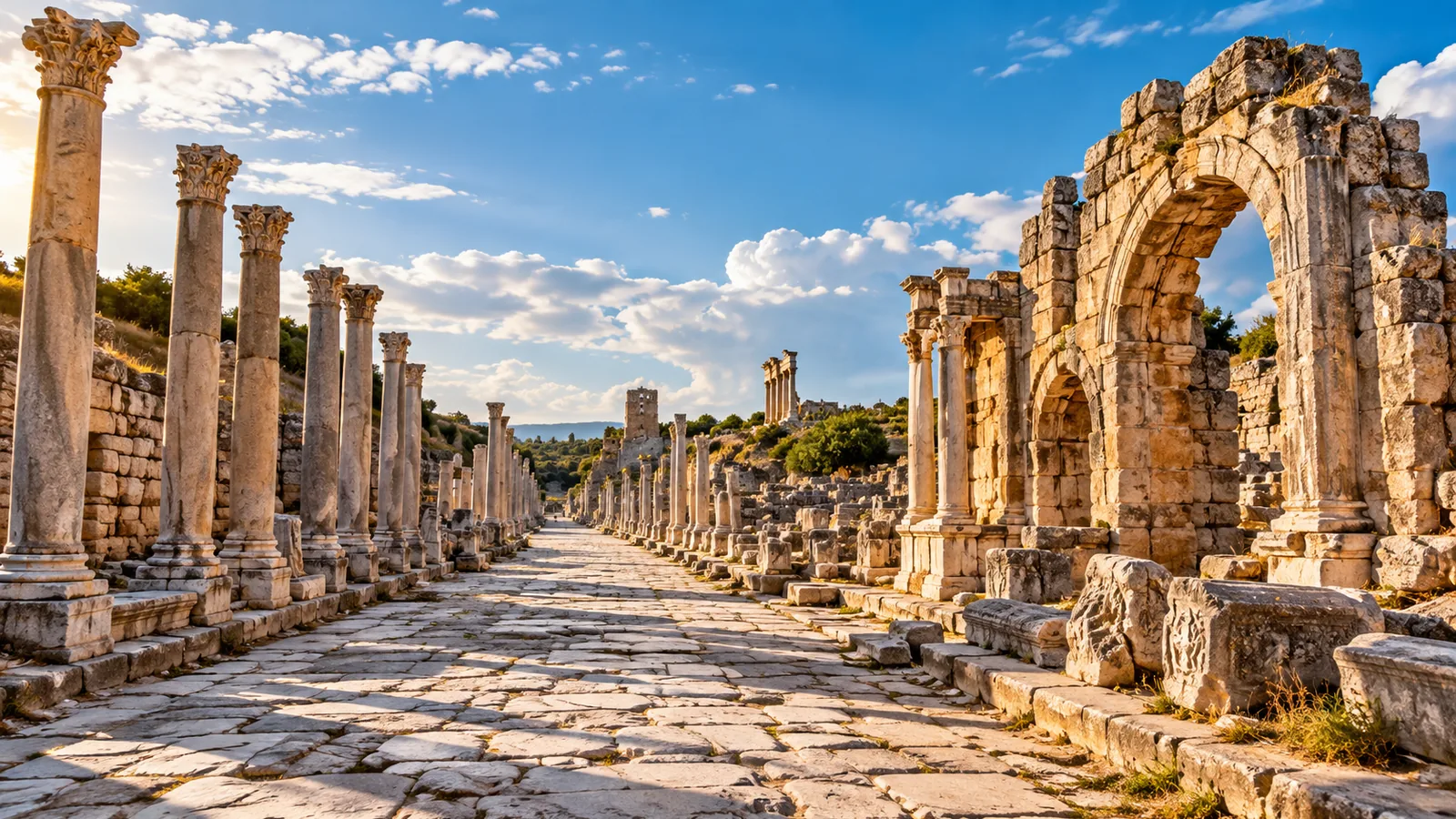
The strongest experience is walking the colonnaded street toward the monumental centre, then slowing down around the Roman baths, Hellenistic towers, agora and water channels. Many important sculptures found at Perge are now displayed in Antalya Museum.
If you enjoy archaeology, allow around 2–3 hours. A faster visit is possible, but Perge rewards a slower walk because the city plan is easier to understand when you see the spaces in sequence.
The main Perge highlights.
Hellenistic towers and gates
The monumental towers and gateway area help explain how impressive the approach to Perge once was. They are among the site's most recognizable remains.
Colonnaded street
Walk along the long ancient street once lined with shops and public buildings. The preserved water channel running through the centre is one of Perge's defining features.
Bath complex
Perge's Roman baths are especially important for understanding how bathing, heating and social life worked in a wealthy Roman city.
Agora and stadium
The agora shows the commercial and civic side of Perge, while the horseshoe-shaped stadium is one of the major surviving structures at the site.
A city with roots well before the Roman period.
Early settlement
Archaeological evidence from the acropolis pushes Perge's history back to the Early Bronze Age.
Parha
Official sources connect Perge with the place called Parha in Hittite written records.
Wealth and monumental building
Perge became especially prosperous under Roman rule, when major streets, baths, public buildings and entertainment structures shaped the city visitors see today.
Excavations since 1946
Systematic excavations led by Turkish archaeologists began in 1946 and have continued to reveal major architectural and sculptural finds.
Current official Perge visitor information.
The Turkish Museums website currently lists Perge as open daily from 08:00 to 20:00, with the ticket office closing at 19:30.
Important: the official site currently says the ancient theatre is temporarily closed until restoration work is completed. The wider archaeological site remains open.
This guide does not list a foreign visitor ticket price because live pricing can change. Check the official page before you travel.
Check official Perge information →How to use Perge in an Antalya history day.
Perge
Arrive early and give the site around two to three hours. Walk the gates, baths, colonnaded street, agora and stadium before the strongest midday heat.
Aspendos
Continue east to Aspendos for its famous Roman theatre and surrounding archaeological remains.
Side or Manavgat
If you are on a full-day guided route, Side and Manavgat Waterfall are common additions. Independently, adding all four stops can make the day rushed.
Perge is easy to understand visually, but a guide adds historical context.
Best for a slower archaeology visit
Go independently if Perge is your main priority and you want time for photography, the baths, stadium and colonnaded street without keeping to a group schedule.
Perge + Aspendos + Side day tour
The tour option specifically includes Perge, Aspendos, Side and Manavgat Waterfall. Entry fees depend on the option selected, so read the live inclusions before booking.
Check Perge day tourAffiliate link. Going2Turkey may earn a commission at no extra cost to you.
Continue your Antalya route.
Aspendos Theatre
The strongest next stop if you want another major Roman site on the same day.
Duden Waterfalls
Switch from archaeology to Antalya's best-known waterfall scenery.
Kaleici Old Town
Return to central Antalya for historic streets, Hadrian's Gate and the old harbour.
Antalya Guide
Compare Antalya attractions, tours and activities before planning the rest of your stay.
Perge planning questions
Is Perge worth visiting from Antalya?
Yes, especially if you enjoy archaeology. Perge preserves a broad ancient city layout with gates, baths, a colonnaded street, agora and stadium rather than only one headline monument.
How long do I need at Perge?
Allow around two to three hours for a comfortable first visit. A shorter visit is possible, but you will move quickly through a large archaeological area.
What are Perge's current opening hours?
The official Turkish Museums page currently lists 08:00–20:00 daily, with the ticket office closing at 19:30. Check again before travelling because seasonal arrangements can change.
Is the Perge theatre open?
The official site currently says the ancient theatre is temporarily closed while restoration work is completed. The wider Perge archaeological site remains open.
Should I visit Perge or Aspendos?
Choose Perge for the experience of walking through a broader ancient city. Choose Aspendos if your priority is a monumental Roman theatre. They work very well together in one day.
Do I need a guide for Perge?
No. You can explore independently. A licensed guide is most useful if you want the Hellenistic, Roman and early Christian layers explained while walking through the site.
Next: Aspendos Theatre.
Aspendos Theatre
See one of the Mediterranean region's most famous surviving Roman theatres.
Duden Waterfalls
Compare Upper and Lower Duden for a nature stop in Antalya.
Kaleici
Walk Antalya's historic centre and harbour district.
Destination Guide
Build the rest of your Antalya itinerary.